
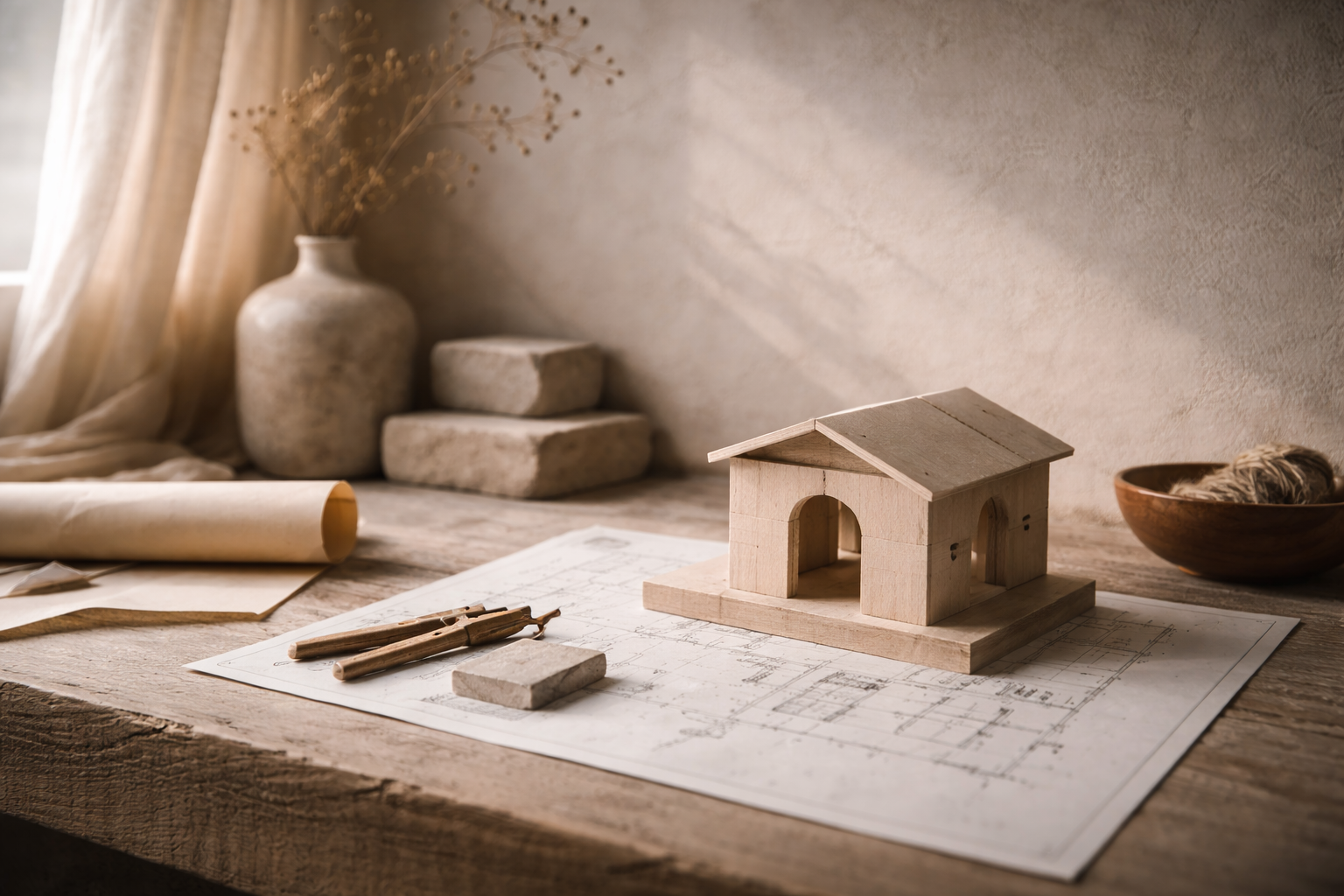
The prevailing myth about calm is that it is a state you find—a resource bestowed by luck, relaxation, or the absence of demands. We are told to wait for deadlines to disappear or the external world to quiet down.
This idea is structurally unsound. This is why modern calm is so fragile.
At Basilia Studio Art, we adhere to the Roman logic: Calm is not found; it is built. It is the predictable, durable product of structure, limits, and repetitive discipline. Calm is not a trait; it is the direct reward for the hard, non-negotiable labor of erecting sound Inner Architecture.
1. The Illusion of External Calm
When a major project finally ends, we often mistake the resulting relaxation for true calm. This external peace is pleasant, but it is fundamentally untrustworthy.
It is fragile because it is built entirely on the absence of pressure. The moment the phone rings or the conditions change, that temporary peace shatters. It was never a structure; it was merely an empty space.
True, resilient calm cannot depend on the world’s cooperation. The quiet room is not architecture; it is just a space waiting for structure. Resilience must be built inward.
2. Calm as a Product of Structure: The Labor of Limits
The foundational labor in building calm is the setting of non-negotiable limits.
The greatest source of mental friction today is the sheer volume of low-level decisions the mind must process daily. This constant negotiation exhausts the attention and creates a perpetual feeling of being unsettled. Calm is the mental stillness achieved when the mind has fewer decisions to negotiate.
This hard work produces the soft reward:
- Non-Negotiable Routine: Establishing fixed times for work, rest, and reflection. This removes the debate over when to start and redirects energy to what to do.
- Boundary: The courage to say a firm “no” to opportunities or demands that do not align with core principles. This is structural integrity.
- Pre-Decision: Making the important choices once. You decide on your values and your schedule, and then execute without wasting energy reopening the case.
Calm is the dividend paid when the core architecture of your life is fixed. The limits are the foundation.
3. The Architecture of Repetition: The Daily Construction
Structure is not built with a single burst of inspiration; it is built with repetitive, intentional action.
The daily discipline—a ten-minute attention practice, a fixed period of deep work—is the labor of bricklaying. It may feel tedious, but each repetition fixes the structure more firmly.
The Mechanism of Security: The mind begins to trust the system because the system is fixed. It knows that if an emotional shock arrives, the structure for processing it will still be standing. If the outside world is chaotic, the inner boundaries remain. This fixedness creates a profound security. Security is the feeling we call calm.
This is the essence of Stewardship. You ensure the foundation is sound before commissioning the high walls. The quiet authority required for effective stewardship is earned through this daily construction. Security is the inevitable product of repetition.
4. The Earned Calm: The Operational Distinction
We must distinguish between fragile stillness and durable resilience.
Unearned Calm is relief. It is founded on the temporary absence of demands, requiring external quiet to function. It is passive and fleeting, and it evaporates when friction returns.
Earned Calm is resilience. It is founded on fixed internal structure and limits. It is operational and portable, designed to perform under pressure. This calm is not a state of feeling good; it is a state of optimal function. It grants the quiet power of authority without noise.
Calm is a predictable product of your labor. You do not find it by waiting for the world to stop demanding things of you. You build it by carefully and deliberately limiting the world’s access to your highest resources. This is the architectural approach to inner life.
Stillness follows structure.